Identify Antiques from Your Photos
with Antikr
Photograph a vintage or collectible item from up to four angles. Antikr analyzes the visible details and returns a likely era, style, materials, historical context, and estimated value range.
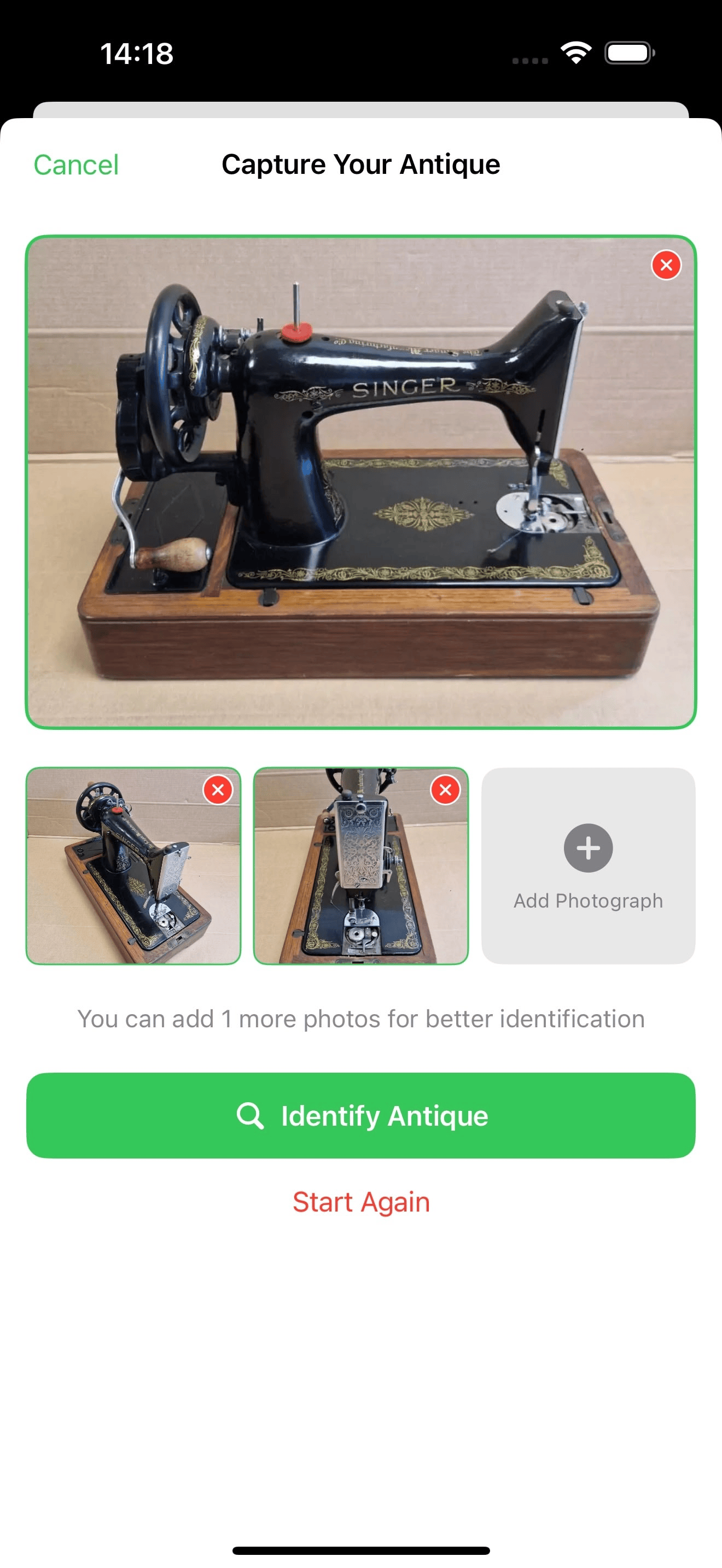
Multi-Angle Capture Technology
Capture the whole item, maker marks, the underside, and close-up details. Multiple views give the analysis more evidence to work with.
Multiple Angles
Capture front, back, side views and close-ups for complete coverage
Combined Analysis
AI reviews the visible evidence across each selected photo
Review Results
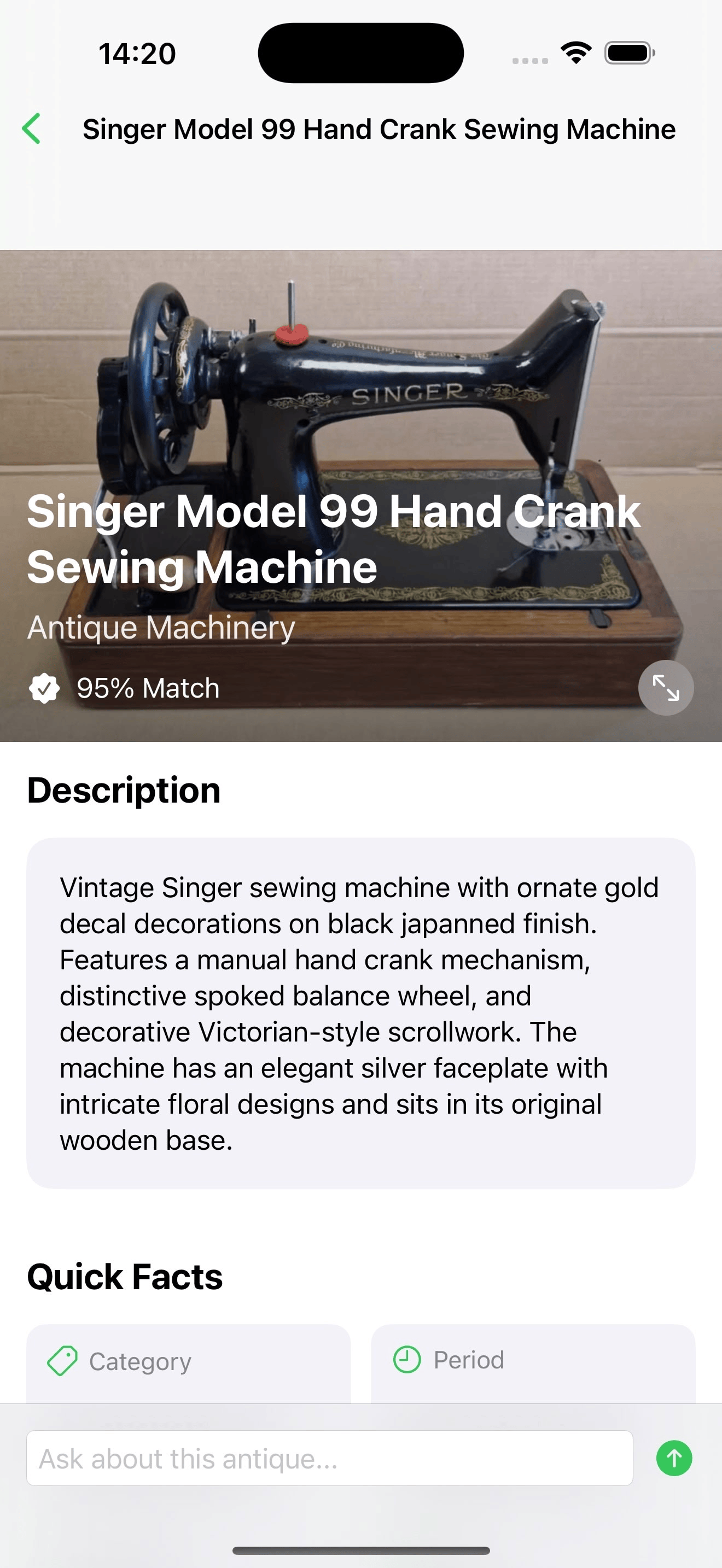
Review the likely match, supporting details, and value estimate
Powerful Features
Tools to identify, research, and care for antique and vintage items
Multi-Angle Analysis
Capture up to four photos to give the analysis more visible details, including marks, materials, and construction.
Photo Identification
Take photos of an antique or vintage item to review its likely style, era, materials, and estimated value range.
AI-Powered Chat
Ask follow-up questions about an identified item and get additional AI-generated context.
Item Analysis
Review likely materials, craftsmanship clues, historical context, and questions to investigate further.
Historical Context
Review likely historical context, origin, manufacturing period, and style clues.
Care & Preservation Tips
Get care and preservation suggestions to help you research appropriate handling for the item.
Perfect For
Useful starting points for collectors, shoppers, designers, and history enthusiasts
Antique Collectors & Enthusiasts
Research likely identification details, historical context, and estimated value ranges for collection items
Estate Sale & Flea Market Shoppers
Gather clues about an item before deciding what to inspect or research further
Auction House Visitors
Review likely materials, period, and maker clues, then verify them with the auction house or a specialist
Interior Designers & History Buffs
Explore likely period details and historical context for vintage objects and decorative pieces
See It In Action
Experience the intuitive interface and powerful features
Multi-Angle Capture
Multiple photos of useful details
AI Analysis
AI review of visible clues
Identify & Research
Detailed identification results
Learn & Discover
Historical context & care tips
Build a useful four-photo antique identification set
Antikr can analyze up to four photos. Choose images that answer different questions about the same object: what it is, how it was made, which marks are present and what condition is visible. Four nearly identical front views provide less evidence than a clear overview plus meaningful details.
1. Start with the whole object
Keep its outline and proportions in frame against an uncluttered background. Include handles, feet, lids or other parts that change its shape. If scale matters, photograph a ruler with its units visible rather than relying on a close-up that makes a small object look large.
2. Show the back or underside
A base, reverse or interior can reveal construction details that the decorative front hides. Capture the object as it is, including visible joins, fasteners, seams or foot rings. Avoid processing the image in a way that changes textures or removes wear.
3. Make a mark legible
Use a close view for a stamp, signature, number or label. Keep its edges visible and check focus before submitting it. A partly obscured letter should remain uncertain; a plausible-looking reading is not the same as a confirmed maker. Compare any suggested name with an authoritative maker or museum record.
4. Add the detail that tests the suggestion
Choose a material, construction or damage detail that could distinguish similar objects. If an initial result mentions a technique you cannot see, use the follow-up chat to ask what visible evidence supports it. Keep a suggested material, period or origin separate from facts independently confirmed by a mark or documented history.
Example: photograph a ceramic jug
Take one photo showing the jug and handle, one of its full underside, a close-up of the stamp and a side view showing how the handle joins the body. If two makers used similar stamps, the complete mark and construction details give you something to compare with a catalog. Record an uncertain maker as a possibility until you can verify it.
A photographic resemblance does not establish provenance, authenticity or a formal appraisal value. Visible wear is only part of condition, and an estimated range depends on the identification being right. For a consequential purchase or sale, take the images and supporting records to a qualified specialist rather than treating the AI result as proof.
Explore Antikr for iPhone →Antique Identification FAQ
Direct answers about photos, estimates, saved items, and professional verification.
How does Antikr identify an antique?
Antikr analyzes up to four photos of the item and its visible details. It returns a likely identification with information about style, era, materials, craftsmanship, and historical context.
Is Antikr a professional appraisal or authentication service?
No. Antikr provides AI-generated identification guidance and an estimated value range for research and educational use. Confirm important purchases, sales, or authenticity questions with a qualified specialist.
Which photos help with antique identification?
Photograph the full item, the back or underside, maker marks or signatures, and a close-up of materials or construction details. Clear, well-lit photos give the analysis more visible evidence.
Can I ask questions after an item is identified?
Yes. The built-in AI chat lets you ask follow-up questions about the result, including likely origin, care, preservation, and details worth checking.
Can I access saved items on another Apple device?
Yes. Antikr uses iCloud sync so saved items and history can be available across Apple devices signed into the same iCloud account.
What the Analysis Covers
Antikr turns visible details in your photos into a structured starting point for researching an item.
Up to 4
Photos per item
Follow-up
AI chat about an identified item
iCloud
Sync for saved items and history
Our AI Technology Provides:
- Historical context and period identification
- Questions to verify and condition observations
- Preservation and maintenance recommendations
- Market insights and value estimations
AI results are a research aid, not a professional appraisal or authentication.
Unlock the Stories Behind Your Antique Treasures
Use multiple photos to research a likely identification, historical context, care guidance, and estimated value range.
Note: This app is designed for educational and informational purposes. For official appraisals, please consult certified antique professionals.